Biomed vs HealthSci: 3 Key Differences in First-Year Premed at the University of Auckland
Harry Lee | 4 December 2025
If you’re considering a Premed pathway at the University of Auckland, you might be torn between first-year Biomedical Science (BSc BioMed) and first-year Health Sciences (BHSc). While both programmes are eligible for those applying for MBChB, there are three key differences between them that can influence your choice. Let’s break them down:
1. Course Structure and Workload: Intensity vs Consistency
In Biomed, semester one is intense, with three core papers: BIOSCI107, POPLHLTH111, and CHEM110. This creates a shorter but more highly intensive period (Mar-Jun), where students get hit with 3 out of 4 of the core papers right from the start. This also means that if you perform well in semester one and get those 3A+s, you have much more time during the inter-semester break and semester two to focus on preparing for your UCAT and medical school interviews.
In contrast, HealthSci used to follow the same structure, but from 2025 onward, CHEM110 has been moved to semester two to accommodate the new compulsory WTR course. As a result, HealthSci students face a more consistent workload throughout the year, with 2 core papers in each semester. Many HealthSci students from 2025 even reported that semester two feels harder than semester one, due to the added complexity of MEDSCI142 (the most content-heavy paper in first-year Premed) and CHEM110 now placed in that semester, alongside the pressure of UCAT and interview preparations.
Note: “Core papers” refer to the overlapping four courses between Biomed and HealthSci that contribute to the 60% GPA component of your MBChB application, whereas “non-core papers” are the four courses unique to each programme, which are only considered in the interview selection process.
2. Non-Core Papers and Assessments: Science-Based vs. Social Determinants and Health Systems
Another major difference is in the non-core papers and the type of assessments. Biomed students take more science-based non-core papers like BIOSCI101, BIOSCI106, and PHYSICS160. These papers are heavily focused on science, with in-person tests, exams, and labs.
On the other hand, HealthSci students focus on health systems and social determinants of health in their non-core papers (POPLHLTH101, POPLHLTH102, HLTHPSYC122). POPLHLTH101 covers health systems, while POPLHLTH102 delves deeper into social determinants – understanding the factors that impact health in society. Additionally, the mid-semester tests of both POPLHLTH papers are assessed online. HealthSci also substitutes labs with tutorials, which provide a more discussion-based learning environment. While Biomed students may spend more time in labs, HealthSci students could find that the assignments (essay-based) might take up more time due to their focus on writing.
3. Interview Preparation: HealthSci’s Edge in the MMI
One significant advantage that HealthSci students have over Biomed students is in preparing for the Multiple Mini Interviews (MMI), a key component of the medical school application. HealthSci students are more exposed to health policy and social determinants of health. This allows them to discuss health issues in the MMI with greater detail and clarity. Biomed students, on the other hand, don’t get as much exposure to these topics, which can make the MMI process a bit more challenging for them.
Bonus: Since November 2025, there are now two distinct WTR courses for Biomed and HealthSci students: WTRSCI100 and WTRMHS100. This adjustment, outlined on the University’s website, reflects the evolving structure of both programmes and further defines the differences in approach to writing and research.
Biomed vs HealthSci: Which Path is Right for You?
Choosing between Biomed and HealthSci depends on the kind of academic experience you want in your first year. If you’re looking for a short burst of intense workload and a more science-heavy semester 2 with a focus on in-person exams and labs – and potentially more time to prepare for the UCAT and interviews – Biomed might be the right choice for you. However, if you prefer a more consistent workload, with essay-based assignments, online mid-semester tests, and the added benefit of preparation for the medical school interview, HealthSci could be the ideal fit.
Regardless of the path you choose, it’s always a good idea to have additional support along the way. Whether you’re preparing for the UCAT, your MMI, or need guidance throughout your first year, the right support can make all the difference in achieving your goals.
For a deeper look at entry into MBChB and how the selection system works beyond the Biomed vs HealthSci debate, read our Complete Guide on Entering Medical School at the University of Auckland.
If you are serious about preparing for University of Auckland Medical School Entry and want targeted guidance across GPA, UCAT and MMI, explore our CrashMed Bootcamp.
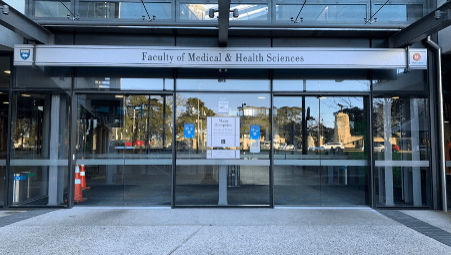
Grafton campus.